
-
President Joe Biden is calling for sweeping investment in electric vehicles, renewable power and the electric grid as part of a broad blueprint to bolster the U.S. economy while combating climate change.
March 31
-
More than a half century after Lyndon Johnson’s war on poverty, the new administration plans a mass expansion of government spending and a revamp of the Tax Code.
March 30
-
President Joe Biden’s economic team at the White House is determined to make good on his campaign pledge to raise taxes on the rich, emboldened by mounting data showing how well America’s wealthy did financially during the pandemic.
March 22
-
President Joe Biden said anyone earning more than $400,000 a year would see a tax increase under his forthcoming economic program, highlighting the administration’s plans to address inequality in part through levies on the wealthy.
March 17
-
President Joe Biden is looking at higher taxes to help pay for a long-term economic program designed as a follow-up to his pandemic-relief bill.
 March 15
-
The president's first major legislative achievement will offer aid to tens of millions of individuals, businesses, and state and local governments.
March 11
-
President Biden signed the American Rescue Plan Act into law Thursday, triggering the release of $1,400 Economic Impact Payments along with tax breaks for stimulating the economy.
 March 11
-
Households will begin receiving the $1,400 stimulus payments included in the pandemic-relief bill approved by Congress before the end of March, according to the White House.
March 11
-
The House is poised to send the $1.9 trillion COVID-19 relief plan to President Joe Biden for his signature, providing an economic boost that will last long after $1,400 stimulus checks start arriving in Americans’ accounts this month.
March 10
-
President Joe Biden is on the cusp of his first legislative win with the House ready to give final passage to his $1.9 trillion COVID-19 relief plan. It includes a big expansion in the child tax credit and makes student loan forgiveness tax free.
March 8
-
The Senate enters the final stages of debating President Joe Biden’s $1.9 trillion pandemic relief bill on Thursday, with passage in the chamber likely pushed off until the weekend.
March 4
-
Progressives are eyeing tax measures including an increase in the capital-gains levy.
February 22 -
The Senate voted 51-50, after Vice President Kamala Harris broke her first tie, to adopt a budget blueprint for President Joe Biden’s $1.9 trillion virus relief package — following nearly 15 hours of wading through amendments from both parties.
February 5
-
Senator Mitt Romney is offering a child tax credit expansion plan similar to a proposal President Joe Biden is pushing to include in the next stimulus bill, offering a glimpse of areas on which Republicans and Democrats could find compromise in a bipartisan package.
February 4
-
Democrats’ go-it-alone stimulus plan faces night of GOP sniping
February 4
-
President Joe Biden and congressional Democrats signaled they’re intent on a large pandemic relief bill.
February 2 -
There’s debate within the administration about how to meet President Biden's promise to issue Americans another $1,400 each in stimulus checks.
February 1
-
Senate Majority Leader Chuck Schumer said he’s ready to start moving on a Democrat-only COVID-19 relief plan as soon as next week if Republicans continue to reject President Joe Biden’s $1.9 trillion proposal.
January 27
-
Janet Yellen won confirmation to become U.S. Treasury secretary, building out President Joe Biden’s team as the administration struggles to win bipartisan support for a $1.9 trillion COVID-19 relief plan for shoring up a weakening economic recovery.
January 26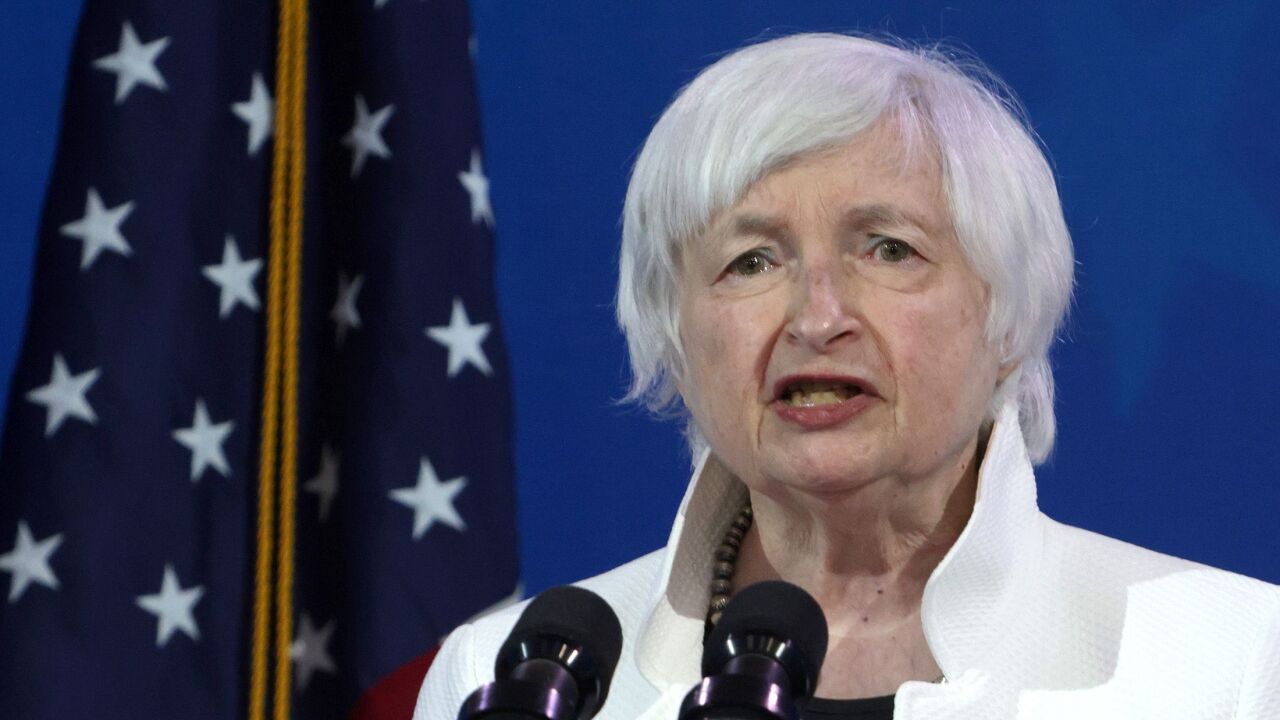
-
Thanks to vagaries of the accounting world, Donald Trump’s administration had a chance in the final weeks of the presidential race to cancel more than $200 billion of student loans with no immediate hit to the Department of Education’s massive portfolio. Yet it didn’t do it. Now, perhaps Joe Biden will.
January 22


